
“Every great beer has a story. This is the story of how we chose ours.”
Before the first beer is poured. Before the first toast is made. Before the sun sets over Palawan Green. The journey begins around a tasting table.
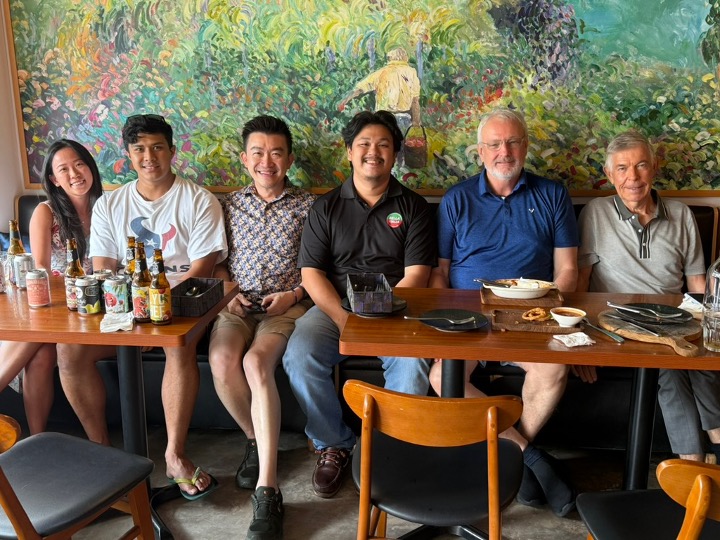
On 23 July 2026, a small group of passionate beer lovers gathered at Bella Italia for the first official tasting session to help shape Sunset Social, the premium hospitality experience at BFA @ The Beach.
Hosted by Shawn Tjong – restaurateur at Bella Italia, passionate advocate for craft beer and an avid Untappd user – the afternoon brought together a diverse panel representing different backgrounds and experiences. Joining Shawn were local craft beer enthusiasts Kyran Kuttan and Yong Le’schane, alongside Lex Ronteltap, a retired Dutch brewmaster, and Johan De Deyn, a retired Belgian brewmaster. Both Lex and Johan enjoyed international careers with Heineken, working across numerous markets, including China, before eventually settling in Singapore.
Together, the panel sampled a curated selection of 19 beers from 1925 Brewing Co., Rainforest Brewery and Sunbird Brewing, with one shared objective:
To identify the beers that best represent the quality, creativity and innovation of Singapore’s independent craft brewing scene – and to curate a memorable beer journey for Sunset Social guests.
This tasting was never intended to rank breweries or declare winners. Instead, it reflected a much broader purpose. Beerfest Asia has always believed that festivals should do more than showcase beer. They should create meaningful opportunities for local breweries to grow, introduce their beers to new audiences and strengthen appreciation for the craftsmanship behind every brew.
As BFA evolves into BFA @ The Beach, we remain committed to supporting and nurturing Singapore’s independent craft brewing community. Sunset Social is one expression of that commitment: a carefully curated beer and canapé experience that celebrates local breweries while inviting guests to discover flavours they may never have encountered before. Every brewery selected represents more than a place on the menu. It represents the passion of the brewer, the courage to innovate, and the belief that Singapore’s craft beer scene deserves to stand proudly alongside the best in the region.
To ensure every beer was judged purely on its own merits, the brewers’ tasting notes were intentionally withheld before each tasting. No one knew how the brewery described the beer. Instead, each panellist relied solely on what they could see, smell and taste, recording their own observations before any official tasting notes were revealed. Only after every beer had been discussed did we compare the panel’s impressions with the brewer’s intended flavour profile.
The exercise proved surprisingly revealing. In many cases, the panel independently identified exactly the aromas and flavours the brewers had intended to express. Notes of tropical fruits, citrus, roasted coffee, chocolate, floral aromas and refreshing acidity surfaced repeatedly without any prompting. Equally interesting were the differences. Some tasters picked up flavours the brewers themselves had never mentioned. Others interpreted familiar aromas differently, reminding us that every beer tells a slightly different story depending on the person holding the glass. Rather than looking for “right” or “wrong” answers, the tasting became an exploration of how beers are genuinely experienced by consumers.
One observation stood out over the course of the afternoon. With the exception of Shawn and Kyran, most of the panel had little prior familiarity with the breweries being featured. That proved to be one of the session’s greatest strengths. Without preconceived opinions or loyalty towards particular breweries, every beer was assessed simply for what it delivered in the glass. In many ways, the panel mirrored the experience that countless visitors will have at BFA @ The Beach. While some guests will already know Singapore’s independent breweries, many – including international visitors and those new to craft beer – will be discovering them for the very first time. The tasting therefore became more than a technical exercise. It became a glimpse into how Singapore’s brewers might be experienced by fresh audiences with open minds and curious palates.
One conversation resurfaced throughout the afternoon. The panel admired the remarkable creativity shown by Singapore’s brewers. Inspired by local ingredients, regional influences and contemporary brewing techniques, the beers showcased flavours that went far beyond conventional expectations. Tropical fruits, pandan, coconut, lychee, berries, coffee, chocolate and festive spices all made appearances, while several beers celebrated unmistakably Asian inspirations.
It was encouraging to see local brewers creating beers with a genuine sense of place rather than simply replicating traditional European styles. At the same time, the discussion raised an interesting question. How far should creativity go? Several beers blurred the lines between beer and other beverages. Comparisons to kombucha, cocktails and soft drinks surfaced during the conversations – not as criticisms, but as thoughtful reflections on where innovation meets identity. The consensus was that experimentation is essential to keeping craft beer vibrant and exciting. Yet even the boldest creations should continue to celebrate what makes beer, beer. That balance between creativity and authenticity became one of the afternoon’s most thought-provoking themes.
First, there was broad agreement that the overall standard of brewing was impressively high. Across a diverse range of styles – from crisp lagers and tropical pale ales to pastry-inspired creations and rich stouts – the beers demonstrated technical competence, balance and confidence.
Although every panellist had personal favourites, several common themes emerged.
Second, drinkability mattered just as much as innovation. Words such as balanced, clean, refreshing, crisp and sessionable appeared repeatedly throughout the tasting notes. These are precisely the qualities we believe make for memorable conversations around the table and successful food pairings.
Third, the tasting reinforced how effectively many brewers communicated their intended flavours. Without seeing the official tasting notes, panellists independently identified many of the same characteristics, suggesting that the brewers’ craftsmanship was translating clearly from glass to palate.
The outliers were equally valuable. A beer inspired by familiar local desserts evoked entirely different memories for different people. Fruit-forward beers sparked conversations about tropical produce unique to the region. Sour styles divided opinion in the best possible way, reminding us that discovery often begins with disagreement. Those moments weren’t weaknesses. They were precisely what made the afternoon memorable.
Ultimately, the panel reached a clear conclusion. Singapore’s independent breweries are producing beers of a quality – and with a level of creativity – that deserve to be experienced by a wider audience. There was broad consensus that the breweries selected would sit confidently within the Sunset Social experience, where they will be thoughtfully paired with a curated selection of canapés, to be revealed in the coming weeks. By showcasing local breweries in this setting, Beerfest Asia hopes not only to create memorable food and beer pairings but also to encourage more people to discover the remarkable talent within Singapore’s brewing community.
As the tasting drew to a close, the conversation turned naturally towards the future. The panel expressed a strong desire for Beerfest Asia to organise similar tasting sessions with more local breweries, creating regular opportunities for brewers, hospitality professionals and beer enthusiasts to exchange ideas, provide constructive feedback and celebrate Singapore’s evolving craft beer culture.
There was also a shared aspiration that more restaurants, bars and hospitality venues across Singapore would champion locally brewed beers alongside international labels. Singapore’s brewers have demonstrated that they possess both the technical capability and the creative imagination to produce beers worthy of wider recognition. The challenge now is ensuring they have the opportunities – and the platforms – to reach a wider and perhaps even more regional, if not, international audience.
If Beerfest Asia can play even a small part in that journey, then this afternoon at Bella Italia will have achieved something far greater than selecting beers for a festival. It will have strengthened connections between brewers, hospitality professionals and beer lovers. It will have encouraged new conversations around local craft beer. Most importantly, it will have helped more people discover that some of Singapore’s most exciting beers are being brewed right here at home. Because every great beer deserves to be discovered. And every great brewery deserves a community behind it.
Style: Fruit Beer
What the Brewers Set Out to Create
A light, refreshing fruit beer showcasing delicate lychee aromas supported by subtle floral notes, balanced sweetness and a clean, crisp finish.
What the Panel Discovered
The panel consistently described the beer as balanced, refreshing and highly approachable. While the lychee remained elegant rather than overpowering, several tasters independently identified floral and rose characteristics alongside a clean finish. Shawn appreciated its fruit-forward profile, while Lex highlighted its overall balance and drinkability – closely echoing the brewer’s intended expression.
Style: Citrus Ale
What the Brewers Set Out to Create
A crisp beer expressing bright yuzu citrus aromas with refreshing acidity and a clean finish.
What the Panel Discovered
Without knowing the brewer’s description, the panel consistently recognised citrus characteristics and found the beer refreshing and easy to drink. Several felt the yuzu expression was intentionally restrained, resulting in a subtle rather than bold interpretation.
Style: India Pale Ale
What the Brewers Set Out to Create
A hop-forward IPA layered with tropical fruit, citrus and pine characteristics, supported by balanced bitterness.
What the Panel Discovered
Tropical fruit, pineapple, peaches and citrus appeared repeatedly across the tasting sheets. Although individual perceptions of hop intensity varied, the panel broadly agreed that the beer achieved an excellent balance between fruit expression and bitterness, closely reflecting the brewer’s intended profile.
Style: Specialty Fruit Beer
What the Brewers Set Out to Create
A uniquely Singapore-inspired beer celebrating the unmistakable aroma and flavour of durian while remaining approachable and well balanced.What the Panel Discovered
The unmistakable durian aroma immediately captured everyone’s attention. Beyond that, the panel independently identified jackfruit, cempedak and other tropical fruit characteristics, with several commenting on how authentically local the beer felt. While opinions differed on personal preference, there was universal appreciation for the brewer’s creativity and willingness to celebrate Singaporean flavours.
Style: Belgian Dark Strong Ale
ABV: 9%
What the Brewers Set Out to Create
Inspired by a Christmas visit to Finland, Berry Merry was created to evoke quiet winter evenings and traditional spiced berry drinks. Cinnamon and fresh blueberries were used subtly so that the character of the Belgian ale remained at the forefront. The bottle-conditioned beer had also been aged for two years.
What the Panel Discovered
The intended festive character came through clearly. Tasters independently identified cherries, dark berries, prunes, cinnamon and mulled-wine-like spices. Its sweetness, warming alcohol and mature character were also widely recognised. The panel’s impressions aligned strongly with the brewer’s inspiration, although the fruit was often perceived as cherry or prune rather than specifically blueberry. Several tasters found it rich and compelling, while others felt its strength and sweetness made it more suitable for slow, considered enjoyment than casual drinking.
Style: Golden/Summer Ale
ABV: 5%
What the Brewers Set Out to Create
A light-bodied, effortlessly drinkable beer designed for Singapore’s tropical climate. Subtle pineapple and melon characteristics from the hops were intended to accompany a clean, crisp finish that would encourage another sip.
What the Panel Discovered
The strongest common themes were balance, tropical fruit, low bitterness and easy drinkability. Pineapple was recognised more consistently than melon, with some tasters also finding a dry finish and gentle fruit sweetness. Johan described it as his preferred beer at that stage of the tasting, while others praised its refreshing and uncomplicated character. One taster associated the name with the richer texture of a piña colada and therefore expected a fuller body, but the general consensus was that the beer successfully achieved the brewer’s aim of being clean, accessible and well suited to warm weather.
Style: Gose
ABV: 4.5%
What the Brewers Set Out to Create
Inspired by Chinatown’s fruit stalls and the coastal breeze of East Coast Park, Lychee Red combines lychee purée with gentle tartness and a subtle saline character. Dragon fruit gives the beer its deep ruby colour, evoking the glow of festive lanterns.
What the Panel Discovered
The panel consistently recognised its sour, refreshing and fruit-led personality, although lychee itself was less apparent to several tasters. Comparisons ranged from kombucha and raspberry or mulberry drinks to a Belgian kriek. Lactic acidity, berry flavours and a vivid, palate-awakening quality were recurring observations.
This was also one of the beers that prompted discussion about the boundaries of beer. Some felt it moved towards a soft drink or fermented fruit beverage, while others regarded that unconventional quality as its greatest strength. The acidity and refreshing character aligned well with the brewer’s notes, but the panel generally experienced the fruit as darker berries rather than delicate lychee.
What the Brewers Set Out to Create
A clear, pale-gold lager with a lightly spicy and herbal aroma, grainy-sweet malt character and rounded hop balance. Biscuit and soft dough notes were intended to lead into a gentle, dry and clean finish.
What the Panel Discovered
This emerged as the clearest consensus favourite of the session. Across the panel, the beer was repeatedly described as balanced, clean, refreshing, sessionable and highly drinkable.
The malt character and crisp finish were recognised without prompting, with comments including “best beer so far”, “love this” and “very drinkable”. Its appeal lay not in novelty but in restraint and technical clarity. The panel’s response closely matched the brewer’s intended profile and demonstrated that a well-executed lager could stand out even among more experimental beers.
What the Brewers Set Out to Create
A pale-golden, clear ale combining American hop aromas of citrus, resin and pine with a moderate malt backbone intended to provide balance.
What the Panel Discovered
Citrus and hop bitterness were the strongest shared observations. Some tasters found it fruity, refreshing and easy to drink, while others felt the bitterness lingered too strongly or overwhelmed the underlying beer. The panel generally recognised the brewer’s intended citrus and hop character, although views diverged significantly on whether the malt provided sufficient balance. It was a clear example of how the same assertive hop profile can appeal to experienced pale-ale drinkers while proving challenging to those seeking a softer finish.
What the Brewers Set Out to Create
A pale-gold White IPA combining citrus and grapefruit aromas with Belgian yeast spice. Light bready malt and moderate esters support high hop bitterness, followed by a dry, refreshing and highly carbonated finish.
What the Panel Discovered
The panel independently identified fruit, spice, strong hop aromas and pronounced bitterness. Some appreciated the way the flavour arrived forcefully before fading into a cleaner finish. Others found it astringent and less likely to invite a second glass.
The brewer’s intended citrus, spice and high bitterness were therefore communicated clearly. The differing reactions were driven primarily by personal tolerance for bitterness rather than any uncertainty about the beer’s identity.
What the Brewers Set Out to Create
A black stout with a tan head, sweet chocolate and roasted aromas, light fruit and molasses notes, and a medium roasted-malt character. Silky chocolate and coffee flavours were intended to mingle with noticeable sweetness.
What the Panel Discovered
Roasted coffee, chocolate and smoothness were recognised almost universally. Several tasters found it notably approachable for a stout, praising its restrained bitterness, clean finish and drinkability. Shawn regarded it as the strongest stout of the tasting.
There was some divergence over sweetness. While most felt it was balanced and smooth, one panellist considered it slightly too sweet for the style. Overall, however, the panel’s observations aligned closely with the brewer’s intended chocolate, coffee and roasted profile.
What the Brewers Set Out to Create
A clear copper India Pale Lager with pineapple, citrus, mango and grapefruit layered over light malt and caramel. The beer was intended to have strong hop flavour but only medium-to-low bitterness, finishing crisp, dry and clean.
What the Panel Discovered
Pineapple, citrus, mango and a clean finish were recognised by several tasters, demonstrating clear alignment with the intended fruit profile. The principal divergence concerned bitterness.
Some enjoyed its bitter opening and fruit-led finish, while others found the hops overpowering, astringent and insufficiently balanced. The beer therefore communicated its hop character very clearly, but the panel perceived the bitterness as substantially stronger than the brewer’s description suggested.
What the Brewers Set Out to Create
A hazy, straw-yellow Session IPA with citrus, lime, wheatgrass and peppermint aromas. It was designed to be light-bodied and low in bitterness, with gentle carbonation and fresh citrus flavours.
What the Panel Discovered
The panel generally found it light, fruity and approachable. Pineapple, citrus, floral notes and a clean, crisp finish were recurring observations. Several also appreciated that the flavour tapered away without lingering heavily.
The panel’s impressions supported the brewer’s intention of creating a lighter, less fatiguing IPA. Pineapple emerged more strongly in the independent notes than the lime, wheatgrass or peppermint identified by the brewer.
What the Brewers Set Out to Create
A straw-yellow pale ale with prominent osmanthus florals, pear aromas and a light red-date character. A malt backbone and moderate bitterness were intended to create balance, followed by a clean, crisp and lingering floral finish.
What the Panel Discovered
Pear was the most consistently recognised flavour, together with refreshing herbal or floral qualities and a clean finish. Apple was also identified by one taster. The red-date character was generally difficult for the panel to detect. The overall balance and fruit character aligned with the brewer’s intention, although the osmanthus was subtler to the tasters than the official notes suggested. One panellist also detected a slightly artificial aftertaste, showing that delicate botanical flavours can be experienced quite differently across palates.
What the Brewers Set Out to Create
A jet-black imperial stout inspired by pulut hitam, combining coconut, roasted coffee, chocolate, palm sugar and rice sweetness. It was designed to have low bitterness, a full body and a creamy, warming finish.
What the Panel Discovered
Coffee, coconut, liquorice, fermented rice and sweetness featured strongly in the independent observations. One taster associated its herbal and mint-like qualities with traditional Chinese cough syrup, while another recognised coffee and liquorice more directly. The panel clearly detected the rich, dessert-inspired character intended by the brewer. However, reactions to sweetness varied considerably. Some appreciated its originality and local identity, while others found it much too sweet. It became an important example in the wider discussion about balancing creativity, cultural inspiration and the core identity of beer.
What the Brewers Set Out to Create
A hazy, golden-yellow New England IPA with juicy mango, pineapple and citrus characteristics. It was intended to feel pillowy and balanced, with low bitterness that would not linger.
What the Panel Discovered
Pineapple, tropical fruit and an attractive aroma were recognised consistently. The panel therefore aligned strongly with the brewer on the beer’s fruit expression.
The notable contrast concerned bitterness. Several tasters experienced a strong or lingering bitter finish, with Johan finding it far more bitter than expected. The fruit profile was successfully communicated, but the perceived bitterness was markedly higher than the brewer’s intended low-bitterness expression.
Style: Rice Lager
What the Brewers Set Out to Create
A purple rice lager inspired by kueh salat, with coconut, light pandan and rice aromas. Crisp coconut flavour, gentle rice sweetness, low bitterness and high carbonation were intended to culminate in a creamy rice finish.
What the Panel Discovered
Pandan, coconut and rice were readily recognised, giving the beer an unmistakably local and nostalgic identity. Some tasters loved its clarity, lightness and authentic Singaporean character, finding it fun and easy to drink. Others questioned whether its colour, dessert flavours and overall presentation had taken it beyond what they would ordinarily recognise as beer. This was the strongest outlier in the tasting and the clearest illustration of the panel’s broader debate: creativity was greatly appreciated, but experimentation could sometimes move so far that the core identity of beer became less apparent.
What the Brewers Set Out to Create
A pale, lightly hazy white ale combining subtle umami with orange peel, banana, clove and coriander. Malt sweetness, low bitterness and gentle alcohol warmth were intended to create a smooth and approachable interpretation influenced by Moutai.
What the Panel Discovered
Orange, banana, grain and low bitterness were independently recognised, showing good alignment with several of the brewer’s intended characteristics. One taster described it as a much friendlier introduction to Moutai, while another found it relatively close to a conventional beer.
Reactions to its sourness and grain texture varied, but the panel generally found it lighter and more approachable than the name might suggest. Its Moutai influence was more restrained than some expected, allowing the underlying white-ale character to remain discernible.
What the Brewers Set Out to Create
A cloudy, deep-red sour ale with raisin-like aromas, light tartness, berry sweetness, lively carbonation and a medium-light body.
What the Panel Discovered
Sourness was the clearest common theme. Tasters variously associated it with kombucha, mulberries, raspberries, raisins and even tomato. Some enjoyed its vivid contrast between sweetness and acidity and found it instantly refreshing, while others considered the sourness overpowering. Lex also identified a pronounced buttery character. The panel’s berry and fermented-fruit impressions broadly aligned with the brewer’s intention, although the beer generated a much wider range of sensory associations than the official notes. Like Lychee Red, it prompted discussion about whether highly sour, fruit-driven beers remain immediately recognisable as beer to less familiar drinkers.
Across both breweries, the independent observations frequently corresponded with the brewers’ intended flavours. Fruit, citrus, coffee, chocolate, coconut, pandan, pear, roasted malt and festive spices were often recognised before the official notes were disclosed.
The most revealing differences concerned intensity rather than identity. A beer intended to have restrained bitterness could be experienced as strongly bitter; a deliberately subtle fruit could be overshadowed by acidity; and a locally inspired dessert beer could evoke its source so convincingly that some tasters questioned whether it still felt like beer.
Those contrasts did not diminish the panel’s overall conclusion. The brewing standards were considered sufficiently strong – and the range sufficiently enjoyable, distinctive and fun –
to support the inclusion of local beers within Sunset Social, paired with a curated canapé selection to be revealed.
The tasting showed that Singapore’s breweries are capable not only of producing technically sound beers, but also of creating flavours that spark conversation. That combination of quality, creativity and discovery is precisely what Sunset Social hopes to celebrate.
Reading the brewer’s notes alongside the panel’s observations reveals one of the afternoon’s strongest conclusions.
More often than not, the panel independently identified the very flavours and aromas the brewers intended to showcase. This speaks not only to the technical quality of the beers but also to the brewers’ ability to communicate flavour with clarity and precision.
Where differences emerged, they proved equally valuable. Rather than exposing shortcomings, they highlighted the wonderfully subjective nature of craft beer appreciation. Every glass tells a story – but each drinker may read a different chapter.
That spirit of curiosity, conversation and discovery lies at the heart of both Sunset Social and Beerfest Asia’s ongoing commitment to champion Singapore’s independent craft brewing community.